)
WhatsApp marketing enables businesses to reach customers directly through one of the most important messaging channels. For e-commerce companies, this is no longer just about newsletters or discount promotions: WhatsApp can be used throughout the entire customer journey for marketing, customer service, product advice, order updates, and commerce.
For Shopify merchants, WhatsApp thus opens up an additional touchpoint between the brand and the customer. By connecting Shopify, WhatsApp Business, and other systems, product information, customer communication, and commerce processes can be integrated, for example.
In this post, we’ll show you how WhatsApp marketing works, which strategies are suitable for e-commerce, what companies should keep in mind regarding data protection, and how WhatsApp can be integrated with Shopify and other systems.
Quick Insight: What Is WhatsApp Marketing?
WhatsApp marketing refers to the use of WhatsApp for direct communication with customers and prospects. Companies can use the messaging app for marketing campaigns, product advice, customer service, order and shipping information, and sales processes, among other things. WhatsApp can be an important component of conversational commerce.
Table of contents
- Understanding WhatsApp Marketing: Definition, Types, and Applications
- How does WhatsApp marketing work?
- What are the benefits of WhatsApp marketing?
- Best practice: WhatsApp marketing measures
- WhatsApp Marketing in B2B
- WhatsApp Business or WhatsApp Business Platform?
- How do I get started with WhatsApp marketing?
- How can WhatsApp marketing be measured?
- WhatsApp Marketing with Shopify: Potential & Integration
- WhatsApp Marketing and the GDPR: What Do Businesses Need to Consider?
- Examples of WhatsApp Marketing Tools: Klaviyo & Charles
- Conclusion
Need help optimizing your Shopify store?
Feel free to contact us and we'll be happy to provide you with advice and support.
Understanding WhatsApp Marketing: Definition, Types, and Applications

WhatsApp marketing encompasses all marketing and communication activities that companies carry out with customers and prospects via WhatsApp. These include, for example, newsletters, new product announcements, personalized offers, customer service, product recommendations, order information, and automated messages.
In e-commerce, WhatsApp is therefore not just an additional marketing channel. The messaging app can connect various stages of the customer journey—from the initial product inquiry through consultation to the purchase and subsequent customer service.
What forms of WhatsApp marketing are there?
Generally, several areas of application can be distinguished:
Proactive communication: Companies send customers, for example, offers, product updates, reminders, or other relevant information. Such messages are subject to the respective WhatsApp guidelines and required consents.
Customer-initiated communication: Customers contact a company directly via WhatsApp, for example, with questions about products, delivery times, availability, or returns.
Conversational commerce: Marketing, consultation, and sales are integrated within a single conversation. Customers can discover products, ask questions, receive recommendations, and—depending on the setup—be guided through the purchase process directly within or via the chat.
Reading tip: Would you like to learn more about dialogue-based sales? Check out our guide to conversational commerce to find out how to scale your consulting and sales efforts via chat.
Automated Communication: Chatbots, automated workflows, and WhatsApp Flows can structure and partially automate recurring processes.
Click-to-WhatsApp: Ads and other touchpoints can direct users straight into a WhatsApp conversation, thereby shortening the transition from advertising to personal communication.
WhatsApp itself now explicitly positions its Business Platform for marketing, sales, support, and conversational commerce. Through it, companies can implement interactive messages, product lists, notifications, and commerce processes, among other things.
Quick Insight: What does conversational commerce mean?
Conversational commerce refers to the sale of goods and services directly within messaging apps like WhatsApp. The entire customer journey—from product consultation to the shopping cart to the completion of the purchase—takes place in a conversational chat.
How does WhatsApp marketing work?

Successful WhatsApp marketing isn’t about sending as many messages as possible. The key factors are the right target audience, valid consent, relevant content, and a well-designed communication process.
Typically, a WhatsApp marketing campaign follows five steps:
Opt-in: The customer agrees to receive WhatsApp messages. It’s important to clearly communicate what kind of messages they can expect.
Segmentation: Customers are segmented based on relevant characteristics such as purchasing behavior, interests, or past interactions.
Communication: The company sends a tailored message, such as a new product announcement, an offer, or relevant information.
Dialogue: Unlike with a traditional newsletter, the customer can respond directly. Questions, product advice, or further actions can take place within the conversation.
Conversion and Analysis: Depending on the campaign, the conversation leads to a purchase, an inquiry, a sign-up, or another desired action. The results are then evaluated, and the campaign is optimized.
WhatsApp marketing can also be a component of conversational commerce. Especially when marketing, customer service, product advice, and commerce are integrated, the messenger becomes a dialogue-oriented touchpoint along the customer journey.
Latori Expert Tip
Relevance is more important than reach: WhatsApp should not be viewed as just another channel through which to send as many messages as possible. What matters most is whether the communication offers concrete added value to the individual customer. Therefore, segment your target audiences as precisely as possible and tailor the content, timing, and frequency to each customer’s behavior.
What are the benefits of WhatsApp marketing?
WhatsApp marketing offers e-commerce companies a direct communication channel to their customers. In addition to a personalized approach, WhatsApp enables relevant customer communication, fast service, and the automation of recurring processes.
1. Direct and personalized communication
WhatsApp allows companies to reach customers directly through a familiar messaging channel. Messages can be tailored to target audiences, interests, and past interactions. By linking to store, CRM, or marketing data, content can be personalized in a targeted manner and made more relevant.
2. Fast and Direct Customer Service
Customers can ask questions about products, orders, deliveries, or returns directly via WhatsApp. Companies can respond to concerns immediately and handle simple inquiries automatically. In more complex cases, the communication can be forwarded to a staff member.
3. Relevant Communication Throughout the Customer Journey

WhatsApp can be used at various touchpoints—from initial product information to post-purchase communication. This allows businesses to provide customers with targeted information that is relevant at each stage, such as details about products, orders, or shipping.
4. Automation and Scalability
The WhatsApp Business Platform allows companies to automate marketing and communication processes and integrate them with Shopify, CRM, marketing, or customer service systems. This enables businesses to implement structured and scalable WhatsApp communication even when dealing with large volumes of customers and messages.
Reading tip: Are you already leveraging the full potential of intelligent systems? Check out our guide to Shopify and AI to learn how to use artificial intelligence for even more precise personalization and automation in e-commerce.
Especially important for Shopify merchants:
Successful WhatsApp marketing should not be viewed in isolation. Rather, what matters most is how this communication channel is integrated into your existing e-commerce and marketing infrastructure.
The better your online store, customer data, marketing, and communication work together, the more effectively you can reach customers at various touchpoints.
Reading tip: Learn here how to use Klaviyo for your Shopify marketing and combine it with other messaging channels.
Best practice: WhatsApp marketing measures

WhatsApp Newsletters
WhatsApp newsletters allow companies to inform customers directly via the messaging app about relevant news. Possible content includes, for example, new products, product launches, seasonal campaigns, or select offers.
Unlike a traditional email newsletter, recipients can respond directly to the message—for example, by asking a question about a product. This transforms what was originally one-way communication into a direct exchange with the brand.
For marketing messages, companies must obtain the necessary consent and comply with WhatsApp’s applicable guidelines. Relevant content and an appropriate sending frequency are also crucial to ensure the channel isn’t perceived as disruptive.
WhatsApp Status as a Marketing Channel
WhatsApp Status offers companies another way to share content directly within the messenger app. These posts are available for a limited time and are suitable, for example, for new product launches, promotions, seasonal content, behind-the-scenes glimpses, or attention-grabbing campaigns.
Unlike a targeted WhatsApp newsletter, status content is not sent as individual messages to specific customers. The channel is therefore particularly well-suited for content that companies use to regularly generate attention and maintain their brand’s visibility.
Product Advice and Recommendations
WhatsApp is not only suitable for sending marketing messages but also for providing personalized product advice. For example, customers can ask questions about a product’s features, sizes, availability, or uses.
Depending on the technical implementation, employees or automated systems can recommend suitable products and provide information from the online store.
For more complex product ranges, WhatsApp can thus create an additional advisory channel that supports the purchasing decision.
Customer Service via WhatsApp
WhatsApp can also be used for customer service. Typical inquiries include questions about products, orders, delivery times, shipping, or returns.

Automated responses can handle frequently asked questions and provide customers with the information they need more quickly. For more complex issues, the conversation should be transferred to a representative.
For businesses, seamless integration with existing customer service systems is crucial. This allows inquiries to be handled centrally and customer data to be made available across multiple channels.
Order and Shipping Updates
WhatsApp can also be used for post-purchase communication. For example, businesses can inform customers about the status of an order, shipping details, or other relevant information.
Such messages complement traditional email notifications and can serve as an additional communication channel, especially for time-sensitive information.
For e-commerce companies, integration with the store system is crucial. Automated messages can only contain relevant and up-to-date information if order and shipping data are reliably available.
WhatsApp Shopping Cart and Commerce
Depending on the solution used, WhatsApp can also be utilized for commerce processes. For example, products can be presented within a conversation, and customers can be guided to suitable items.
Depending on the technical integration, shopping carts, payment links, or redirects to the online store can be part of the process. This helps bridge the gap between product consultation and the completion of a purchase.
Which features are actually available depends, among other things, on the WhatsApp solution used, the market, and the technical integration.
WhatsApp Chatbots and Automation
Chatbots can help companies automatically respond to recurring customer inquiries via WhatsApp. Typical use cases include frequently asked questions, product information, order status, or the initial triage of a customer inquiry.
For more complex questions, a chatbot should be able to hand the conversation off to a customer service representative. A close connection between automated communication and customer service is therefore particularly important.
Depending on the system, chatbots can also access product, customer, or order data. This enables more personalized responses and automated customer journeys.
Click-to-WhatsApp Ads
With Click-to-WhatsApp ads, companies can direct users from an ad directly into a WhatsApp conversation.
The advantage: There is no additional communication channel between the ad and personal contact with the brand. For example, users can ask a question directly or start a predefined conversation flow.
Click-to-WhatsApp is therefore particularly well-suited for campaigns in which consultation or personal contact plays an important role.

WhatsApp Flows
WhatsApp Flows enable businesses to create structured interactions directly within WhatsApp. Instead of communicating exclusively via free-form text messages, users can, for example, fill out forms, make selections, or go through specific processes.
Possible use cases include:
Lead generation
Scheduling appointments
Surveys
Product selection
Data collection
Service processes
This makes WhatsApp Flows particularly well-suited for processes where structured user guidance is more effective than a purely text-based conversation.
WhatsApp Marketing in B2B
WhatsApp marketing isn’t just for direct sales to end customers. In the B2B sector as well, companies can use WhatsApp to reach customers, business partners, and prospects personally and quickly. The focus is often on consulting, customer service, lead generation, and maintaining existing business relationships.
Typical applications of WhatsApp marketing in B2B include:
Consulting & Lead Generation: Prospects can contact the company directly, ask questions, and receive advice on complex products and suitable solutions.
Customer Service: Inquiries about products, orders, delivery times, availability, or appointments for consultations and service can be resolved quickly.
Order/Status Communication: Business customers are reliably informed about the current status of orders or deliveries and receive personalized support.
Technical integration is particularly important for larger B2B setups. For example, when WhatsApp is connected to Shopify, CRM, ERP, or customer service systems, information from various systems can be used for customer communication, and recurring processes can be automated.
WhatsApp Business or WhatsApp Business Platform?
Various solutions are available for businesses looking to use WhatsApp. The most suitable option depends primarily on the size of the business, the volume of communication, and the desired level of automation.
WhatsApp Business App

The WhatsApp Business App is primarily designed for smaller businesses that want to manage their customer communications personally. Among other features, it offers a business profile, product catalogs, and tools for organizing customer inquiries.
WhatsApp Business Platform
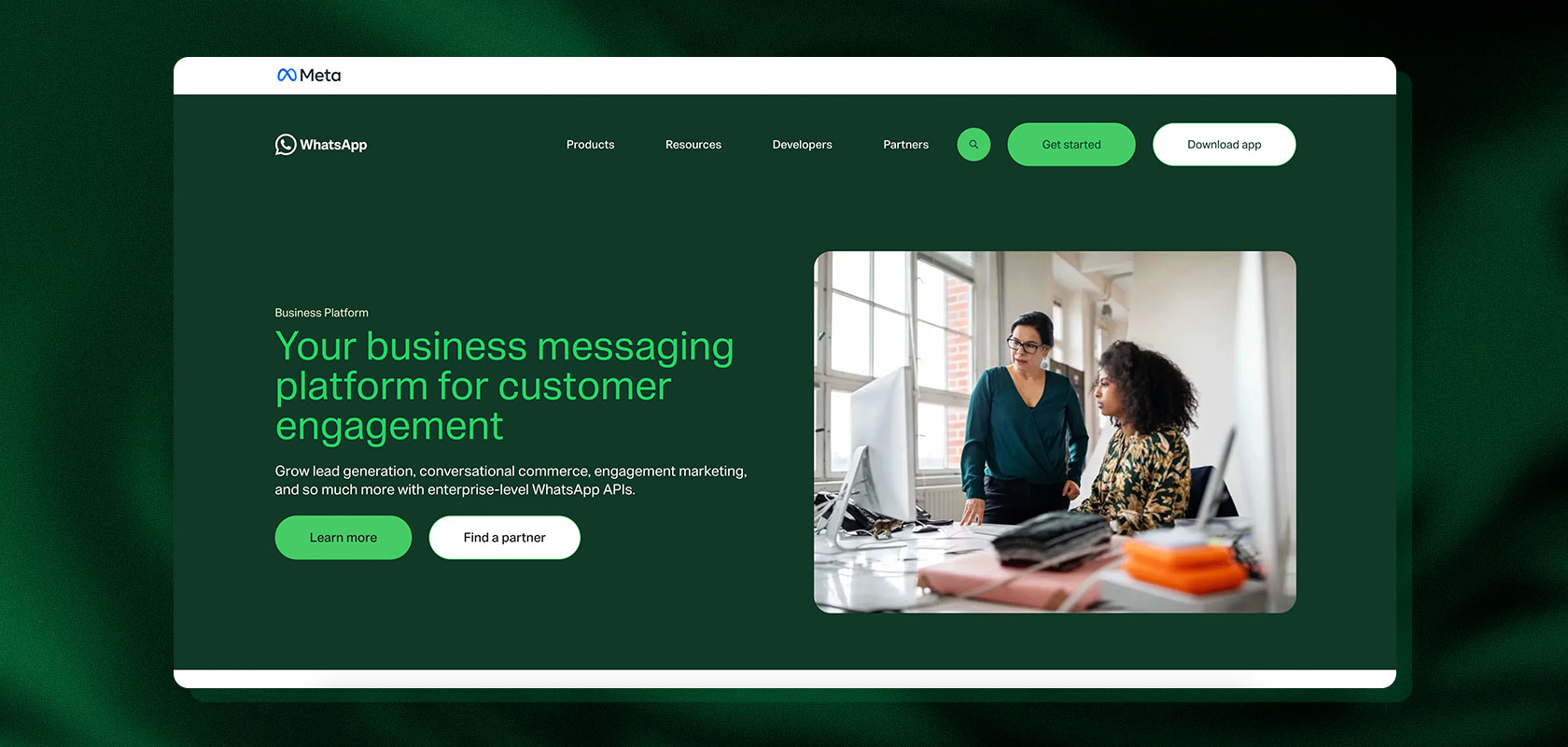
The WhatsApp Business Platform is designed for businesses that want to scale their use of WhatsApp more extensively and integrate it into existing systems. Through APIs, businesses can implement automated communication, customer service, marketing campaigns, and commerce processes, for example.
In summary:
| WhatsApp Business App | WhatsApp Business Platform |
|---|---|
| Personal customer communication | Scalable communication |
| For smaller businesses | For larger or more complex setups |
| Limited automation | Extensive automation |
| Easy to use | API and system integration |
| Individual communication processes | Integration with shop, CRM & other systems |
For larger e-commerce companies using Shopify, CRM, or marketing automation, the WhatsApp Business Platform is therefore often the more relevant foundation.
How do I get started with WhatsApp marketing?
Before you implement WhatsApp marketing in your business, you should first define the goals you want to achieve with this channel. You can then identify target audiences, suitable use cases, and the necessary technical integration.
A practical approach consists of five steps:
Define goals: Determine whether WhatsApp will be used primarily for marketing, customer service, product advice, or transactional communication.
Identify target audiences: Define which customer groups you want to reach via WhatsApp.
Set up the opt-in process: Ensure that the necessary consents are properly obtained and documented.
Select a technical solution: Determine whether the WhatsApp Business app is sufficient or if integration via the WhatsApp Business Platform makes sense.
Implement initial use cases: Start with clearly defined use cases and then analyze their performance.
This ensures that WhatsApp is not just an isolated initiative, but rather a communication channel that is integrated into your existing marketing and commerce strategy.
How can WhatsApp marketing be measured?

The success of WhatsApp marketing should not be measured solely by how many messages a company sends. Which metrics are relevant depends on the specific goal and use case. For example, while interactions and unsubscribes are relevant for a WhatsApp newsletter, a commerce campaign tends to focus more on clicks, conversions, and revenue.
The most important metrics in WhatsApp marketing include:
| KPI | What is measured? |
|---|---|
| Opt-in rate | How many customers agree to receive WhatsApp messages? |
| Click-through rate | How many recipients click a link or call-to-action? |
| Response rate | How many recipients reply to a message? |
| Conversion rate | How many recipients complete the desired action, such as a purchase or inquiry? |
| Revenue per campaign | How much direct revenue does a WhatsApp marketing campaign generate? |
| Unsubscribe rate | How many recipients opt out of receiving WhatsApp communications? |
Which KPIs you should prioritize depends on the goal of the specific campaign. For a newsletter, for example, click-through rate and unsubscribe rate may be the main focus, while for a product campaign, conversion rate and revenue generated are more relevant.
For e-commerce companies, integration with existing analytics and store systems is also crucial. This allows WhatsApp activities to be more effectively linked to downstream actions such as store visits, inquiries, or purchases.
WhatsApp Marketing with Shopify: Potential & Integration
Shopify is increasingly developing WhatsApp as a native marketing channel. For example, merchants can use WhatsApp marketing via Shopify Messaging and collect WhatsApp consents via Shopify Forms. For more complex marketing automation, CRM processes, or cross-channel customer journeys, solutions such as Klaviyo or specialized WhatsApp platforms are also options.
Depending on the use case, product, customer, and order data can be linked to WhatsApp communications.
Use Cases in the Shopify Store
Product advice: Customers receive information about products and relevant recommendations.
Marketing communications: New products, promotions, or relevant content can be communicated via WhatsApp.
Order Information: Order and shipping information can be provided via Messenger.
Customer Service: Questions about products, orders, or returns can be handled directly through WhatsApp.
Personalized Communication: Customer segments and store data can be used to deliver more relevant messages.
Reading tip: Looking to expand your system infrastructure? In our article on CRM systems for Shopify, we show you how to centrally link customer data.
How does the Shopify integration work?
For a professional integration, WhatsApp is typically connected to Shopify via the WhatsApp Business Platform and a corresponding interface or solution. Depending on your requirements, CRM, ERP, PIM, marketing, or customer service systems can also be integrated.
A possible system architecture might look like this, for example:
Shopify → Interface / Middleware → WhatsApp Business Platform → Customer
In this setup, Shopify serves as the central source for commerce data, while WhatsApp is used as the communication channel. Other systems can provide, for example, customer segments, product information, or service processes.
The most appropriate integration depends on the specific business model, the desired WhatsApp marketing activities, and the existing system landscape. For more complex Shopify and Shopify Plus projects, it’s therefore important to first define which data and processes should actually be handled via WhatsApp.
Latori Expert Tip
Use case first, technology second: Before connecting WhatsApp to Shopify, you should define which processes are actually to be handled via the messaging app. Newsletters, customer service, product advice, order information, and e-commerce each have different requirements in terms of data, automation, and interfaces. Especially for more complex Shopify Plus projects, it’s therefore worth analyzing the existing system landscape and the required data flows first.
WhatsApp Marketing and the GDPR: What Do Businesses Need to Consider?

WhatsApp marketing involves the processing of personal data and should therefore be designed to comply with data protection regulations from the outset. The specific requirements that apply depend, among other things, on the WhatsApp product used, the data flows, and the service providers involved.
Quick Insight: Is WhatsApp marketing GDPR-compliant?
WhatsApp marketing can be implemented in compliance with data protection regulations under certain conditions. The specific requirements depend, among other things, on the WhatsApp product used, the specific technical integration, the data flows, and the respective legal basis.
For businesses, consent, transparency, the right to withdraw consent, and the processing of personal data are particularly relevant.
Consent and Opt-In
Before you proactively contact customers via WhatsApp with marketing messages, you need the necessary consent. When obtaining consent, you should transparently communicate what kind of messages customers can expect.
A distinction should be made between marketing communications and, for example, transactional messages such as order or shipping information.
Transparency Regarding Data Processing
Customers should be able to understand what personal data is being processed, for what purpose, and which providers or systems are involved in the communication.
The relevant information should therefore be incorporated into the privacy policy and the respective consent processes.
Withdrawal of Consent and Unsubscription
Customers must be able to withdraw their consent to receive marketing communications. Unsubscriptions should be reliably recorded and taken into account in future marketing campaigns.
This is particularly important for automated WhatsApp marketing processes, where opt-outs must be processed across all systems.
Technical and Organizational Review
When integrating WhatsApp into Shopify, companies should also review what data is transferred between Shopify, WhatsApp, and, if applicable, other systems.
In more complex setups, for example, CRM, marketing automation, ERP, or customer service systems may be involved. Accordingly, the entire data chain should be considered, not just the connection between Shopify and WhatsApp.
Important: The specific data protection assessment depends on the individual setup. This article does not constitute legal advice. Companies should have their planned WhatsApp integration reviewed on a case-by-case basis from a data protection perspective before implementation.
Examples of WhatsApp Marketing Tools: Klaviyo & Charles
WhatsApp Marketing with Klaviyo
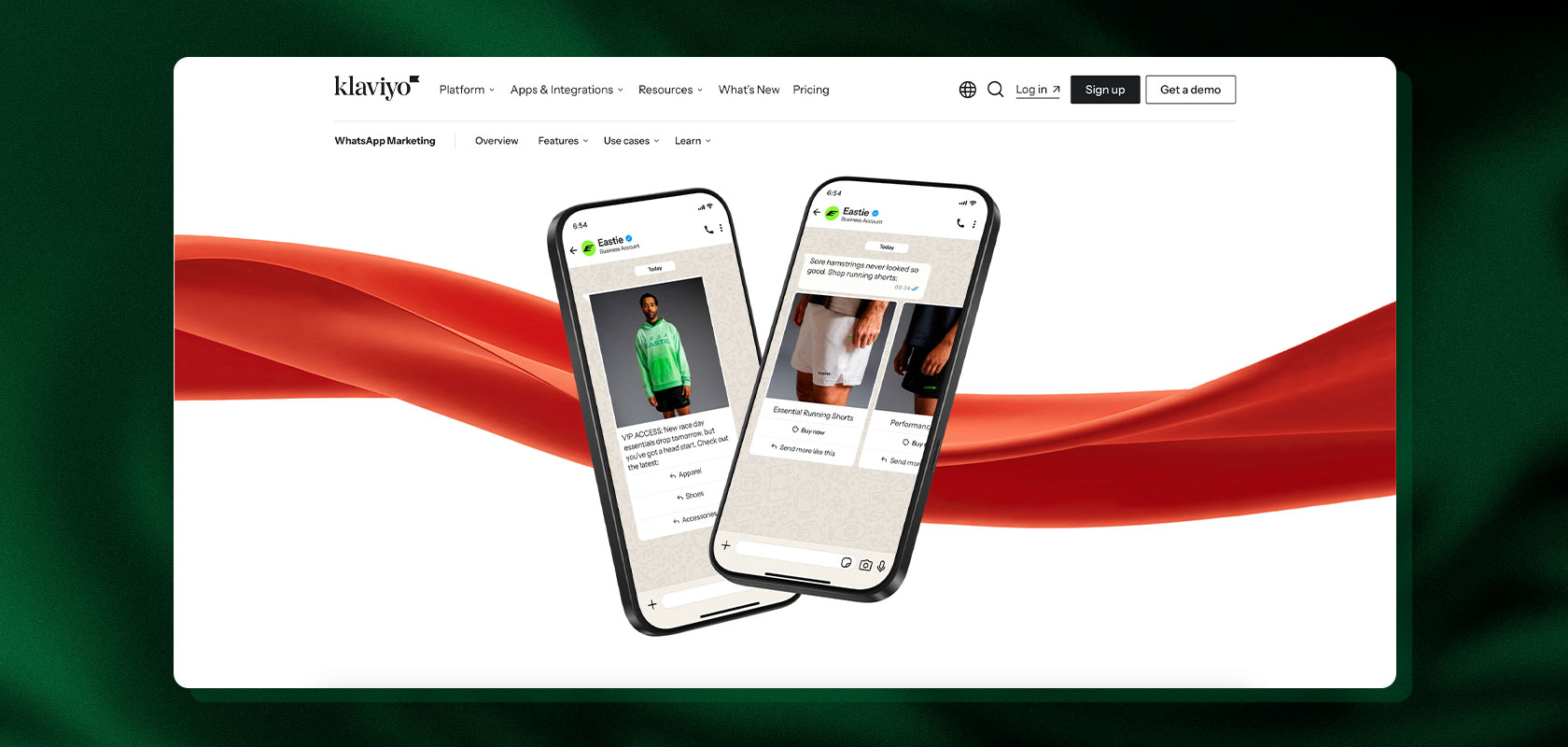
Since 2025, Klaviyo has enabled e-commerce companies to integrate WhatsApp as an additional communication channel into their marketing automation. This allows WhatsApp campaigns and WhatsApp messages to be linked, for example, to existing customer data, segments, and automated flows.
Typical use cases include:
WhatsApp Campaigns: Product launches, promotions, or other relevant marketing content can be delivered to specific WhatsApp subscribers.
Automated Klaviyo Flows: WhatsApp can be used as part of automated customer journeys, for example, in cases of abandoned carts or to target specific customers.
Personalization: Existing customer data and interactions can be used to tailor messages more effectively to individual target groups.
Omnichannel communication: WhatsApp can be combined with other channels such as email and SMS, allowing customers to be reached via the appropriate channel depending on the target group and their consent.
Sending WhatsApp marketing messages requires, among other things, appropriate consent and message templates approved by WhatsApp. The specific features available depend on the individual Klaviyo setup and the requirements for WhatsApp.
Reading tip: In our article on Klaviyo AI & WhatsApp, we show how Klaviyo and WhatsApp can be combined into a cross-channel CRM strategy.
The Charles App for WhatsApp
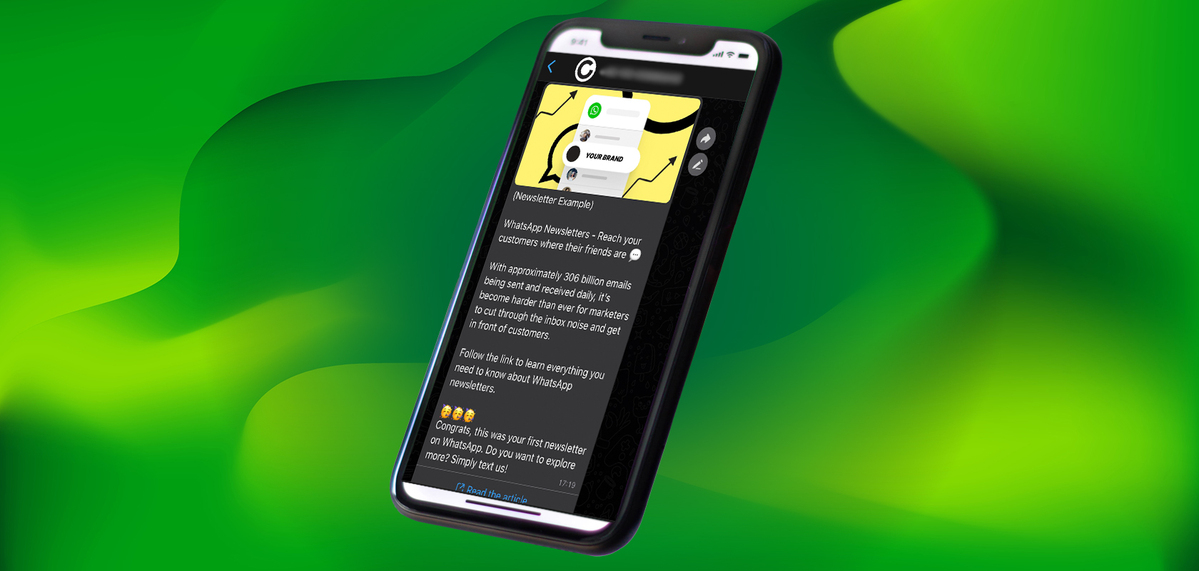
charles is a WhatsApp marketing platform based in Berlin that enables businesses to use WhatsApp as an additional marketing and commerce channel. The solution supports WhatsApp campaigns, automated journeys, and commerce features, among other things, and can be integrated with Shopify and other systems.
Through the Shopify integration, for example, personalized marketing campaigns, automated messages, and shopping carts can be implemented within WhatsApp. To help set up the WhatsApp channel, charles also offers various opt-in options, such as chat-ins.
The charles WhatsApp integration for Shopify is available in the Shopify App Store. We highlight other useful Shopify apps in our overview.
Conclusion
WhatsApp marketing offers e-commerce businesses—especially Shopify merchants—a direct and versatile channel for marketing, consulting, customer service, and order and shipping updates. By connecting to existing commerce systems, customer processes can be specifically automated throughout the entire customer journey.
Success depends on relevant content, clear opt-in consent, precise segmentation, and a technically sound integration.
Would you like to integrate WhatsApp marketing into your Shopify store or expand your existing e-commerce infrastructure? Latori can help you design and technically implement customized Shopify and Shopify Plus solutions. Contact us.
Frequently Asked Questions about WhatsApp Marketing
What is WhatsApp Marketing?
WhatsApp Marketing refers to using WhatsApp to communicate with customers and prospects. Businesses can use the messenger app for marketing campaigns, product updates, customer service, as well as order and shipping notifications.
How does WhatsApp Marketing work?
WhatsApp Marketing is based on direct communication with customers via WhatsApp. Once a customer opts in, businesses can send relevant messages. Depending on the setup, customers can reply, ask questions, or receive further details about products and special offers.
What are the benefits of WhatsApp Marketing?
Key advantages include direct and personalized customer communication, rapid response times, relevant messaging across the customer journey, and the ability to automate recurring processes while connecting them to existing systems.
How does WhatsApp Marketing work with Shopify?
Depending on the use case, WhatsApp can be connected to Shopify directly using native Shopify features or via the WhatsApp Business Platform. For more advanced marketing automation, platforms like Klaviyo or specialized WhatsApp software can also be integrated.
Is WhatsApp Marketing GDPR-compliant?
WhatsApp Marketing can be implemented in a data privacy-compliant manner, though it requires a individual assessment of the specific setup. Businesses must pay close attention to obtaining required user consents, maintaining transparency regarding data processing, providing easy opt-out options, and managing all integrated systems correctly.
What is the difference between WhatsApp Business and the WhatsApp Business Platform?
The WhatsApp Business App is designed primarily for smaller businesses managing customer communication manually. The WhatsApp Business Platform is built for larger-scale, highly automated communication workflows, allowing WhatsApp to integrate directly into Shopify, CRM, and marketing platforms.
Can you run WhatsApp Marketing using Klaviyo?
Yes. Klaviyo allows you to integrate WhatsApp as an additional communication channel within campaigns and automated flows. This makes it possible to combine WhatsApp messaging with customer data, segments, and other marketing channels like email. Proper prerequisites and explicit customer consents are required to send marketing messages.
